win%3Dalliance-networking-session
win-alliance-white
win-herastrau-win-real-estate
win%20real%20estate
win-brokers-broler-bucuri-de-lux
win-brokers-white
win-tireanu-motorsport-win-alliance%20copy
win-motorport-logo-alb

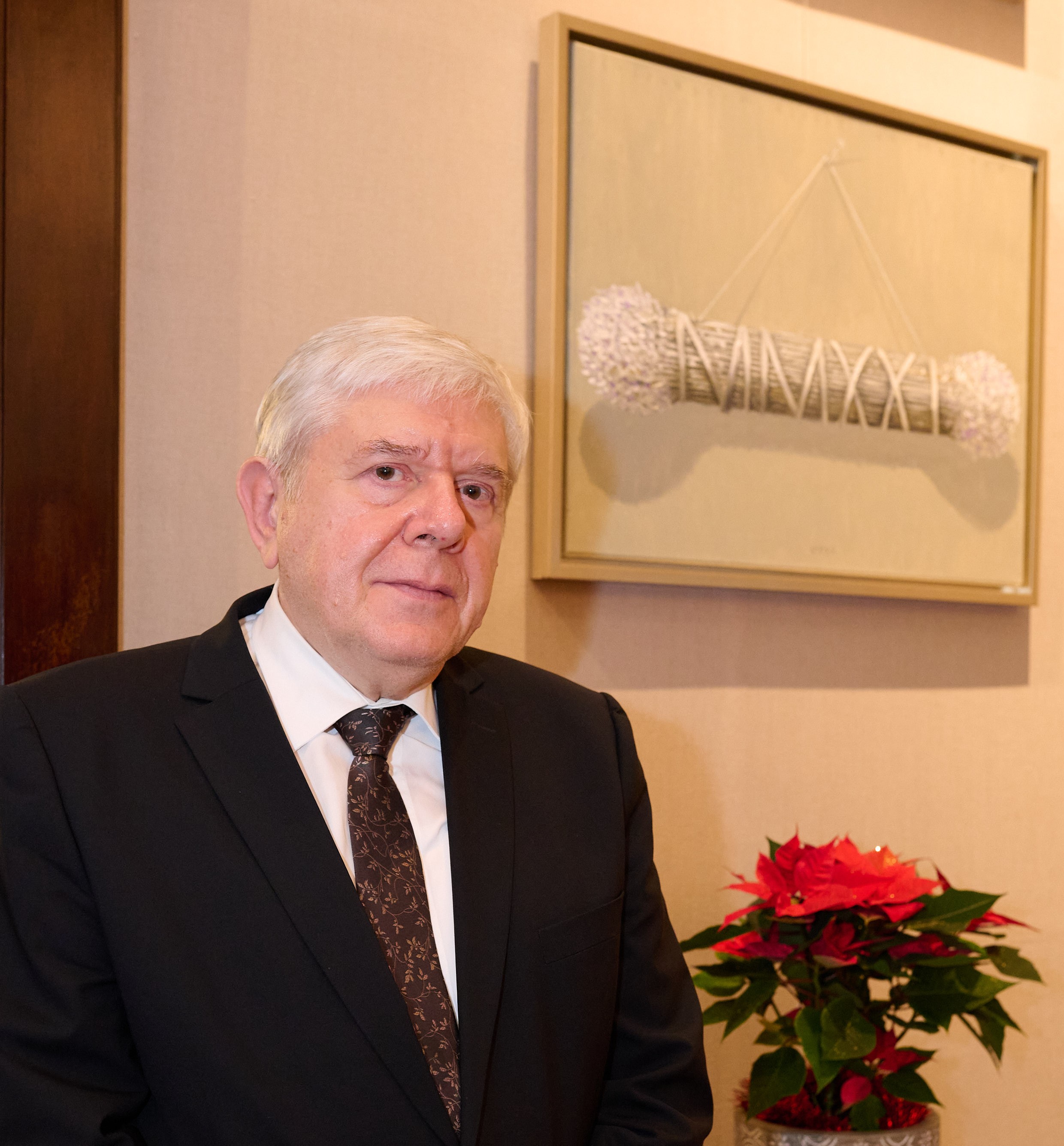
Collector’s Portrait - Florin Droc

Florin Droc is an educational leader and cultural advocate, currently directing the German School Hermann Oberth, an institution shaped by intercultural dialogue and intellectual rigor. A long-time admirer and thoughtful collector of art, his relationship with artistic practice has been formed through sustained exposure, personal encounters with artists, and a belief in art as a discipline of sensitivity rather than a marker of status. Balancing pedagogy and cultural engagement, Florin Droc views art as an essential tool for education, reflection, and mediation between individuals and communities, approaching collecting not as accumulation, but as a quiet, lifelong process of learning and inner transformation.

GMCID-DSC GMCID-DSC

Florin Droc - Hermann Oberth German School Manager

WIN Gallery: Very often, the relationship with art does not begin in a museum, but in a much more intimate space. We are interested to know whether you remember the moment or context in which art became, for you, more than just décor. Was there an initial artwork that made you look differently?

Florin Droc: My relationship with art did not begin through a sudden revelation, but through a quiet familiarity, cultivated since childhood. The Brukenthal Museum in Sibiu was an almost familial space, a place where beauty did not demand explanations, but allowed itself to be observed. I cannot say how conscious this process was, but the constant closeness to collections, to old paintings, to the museum silence, planted a deep respect for art. Perhaps there was no single decisive artwork, but rather a state that gradually sedimented: the feeling that art is not décor, but a form of presence that educates you without constraining you.

WIN Gallery: You lead an educational institution, and the idea of formation is central to your activity. How did your “collector’s gaze” take shape over time? Was it an instinctive process, or one consciously built through reading, encounters, accumulation?

F.D.: Although one often speaks about a “collector’s gaze,” I do not define myself as such. I am, rather, a lover of art. My way of looking formed over time, at the intersection of instinct and accumulation. It was a natural process, but also a conscious one: through reading, through visits, through decisive encounters. Leading an educational institution made me understand that formation is a slow process, one that requires repeated exposure and reflection. My gaze is not an expert one, but an attentive, curious one, willing to learn.

1.%20BUSUIOCUL%20160%20X%2080%20cm 1.%20BUSUIOCUL%20160%20X%2080%20cm

Marcel Lupșe - Basil, 80x160cm, 2022

WIN Gallery: Many people associate collecting with the idea of beauty or aesthetic value. For you, what criteria matter when you decide to acquire a work? What needs to be present for you to feel that a work “remains”?

F.D.: I do not seek beauty in the classical sense, nor value confirmed by the market. When a work “remains,” it is because it manages to communicate with me. Sometimes it is the chromatics, other times a subtle message, other times an emotion difficult to formulate. I approach a painting as I would an open text: I try to decipher it, to understand its internal tensions. I do not seek certainties, but resonance.

WIN Gallery: Are there works in your collection that are linked to a clear biographical moment, to a period or to a change? To what extent does the collection become, unintentionally, a personal journal?

F.D.: Without intending it, the works that surround me come to mark stages of my own biography. They are connected to encounters, to moments of clarity or change. They are not simple chronological markers, but true keys to my personality, indications of how I thought, felt, and related to the world at different moments in life. I clearly remember the early 2000s, when I had a revelatory encounter with the director of the Art High School in Sibiu, Eugen Dornescu. Perhaps he offered me, without explicitly intending to do so, one of the first keys to reading art as a form of inner construction. The dialogues held at that time, with the painter Eugen Dornescu and with the teachers of the art department, the way art was discussed not as a domain reserved for elites, but as an exercise in disciplining sensitivity, helped me understand that one’s gaze is educated, and emotion is refined over time. That encounter contributed to my awareness that the relationship with a painting is not accidental: it says something about you, about the moment you are in, about your level of openness and understanding. In this sense, any collection inevitably becomes a personal journal, not of external events, but of inner transformations.


WIN Gallery: Some collectors seek discretion, others direct dialogue with the artist. How do you position yourself in relation to those whose works you collect? Does it matter to you to know the person behind the work?

F.D.: Dialogue with artists moves me deeply. My encounter with the painter Iacob Lazăr was essential in my maturation as a lover of art. His studio, where I had the great joy of being present countless times, was a space of stories about the world, about vocation, about the effort of becoming an artist. Even the coffee from those moments has remained unique. There I learned to look more attentively, to recognize influences, movements, continuities. The works of the painter Horia Cucerzan, whom I also met in an art gallery in Sibiu, attracted me through this capacity not to exhaust themselves at first sight. They seem to settle into a deep layer of memory and to return, after years, with new meanings. The visit to his studio was accompanied by an effervescent discussion about creation. Likewise, discovering the painter Hamid Nicola Katrib opened my interest toward cultural intersections, toward art as the result of a plural identity. For me, the artist’s biography is important: I read it in order to understand form and color more deeply. A painting is a testimony of life.

WIN Gallery: Contemporary art often involves a degree of uncertainty, both aesthetic and financial. How do you relate to this risk? Is it something that attracts you, or rather something you approach with caution?

F.D.: Painters are often beyond their own time, and their creativity can be provocative, unsettling, or difficult to decode at first encounter. Contemporary art, by its very nature, implies a degree of uncertainty, and this should not be seen as a weakness of the viewer, but as an invitation to learning. I am aware that there are works aligned with global trends that I do not fully understand or immediately resonate with, and I accept this limitation without turning it into refusal. Thinking of my students, I am convinced that they will relate differently to art, will have another emotional register, other interpretative tools, and perhaps a greater openness toward the artistic languages of the present. That is precisely why I believe our role is not to force understanding, but to accompany them in the process of approaching modern and contemporary art: to offer contexts, reference points, dialogue, and time. Art does not impose itself, it is discovered. And this discovery becomes truly valuable when it is accompanied by trust, curiosity, and patience.

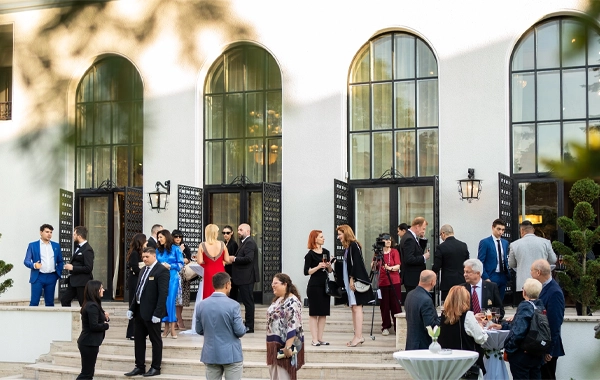
GMCID-DSC_0565%2B1 GMCID-DSC_0565%2B1
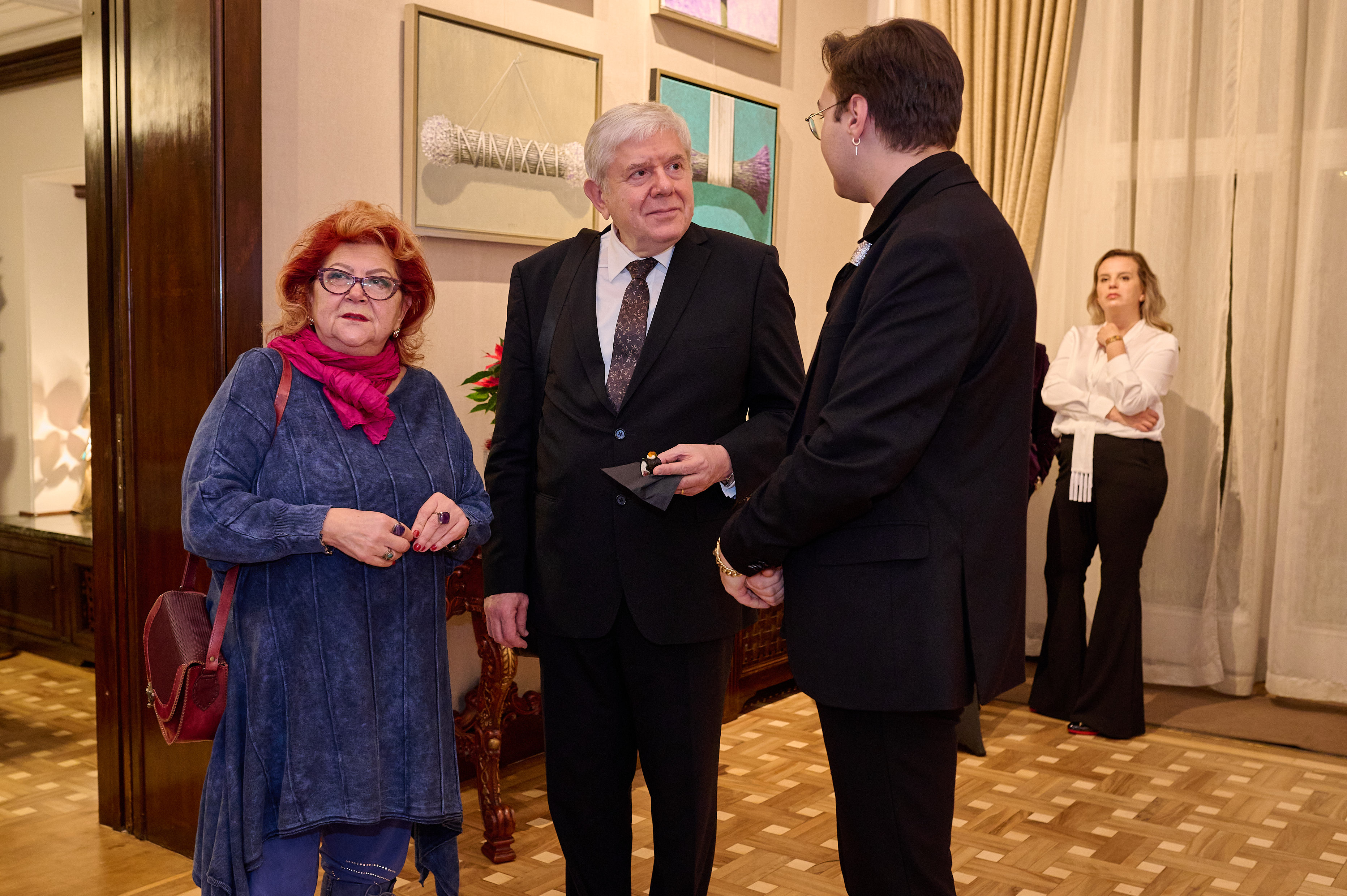
Left to right: Marinela Măntescu-Isac - artist and curator, Florin Droc - Manager of the German School Hermann Oberth, Andrei Fășie - Gallery Assistant
GMCID-DSC_0650%2B1 GMCID-DSC_0650%2B1
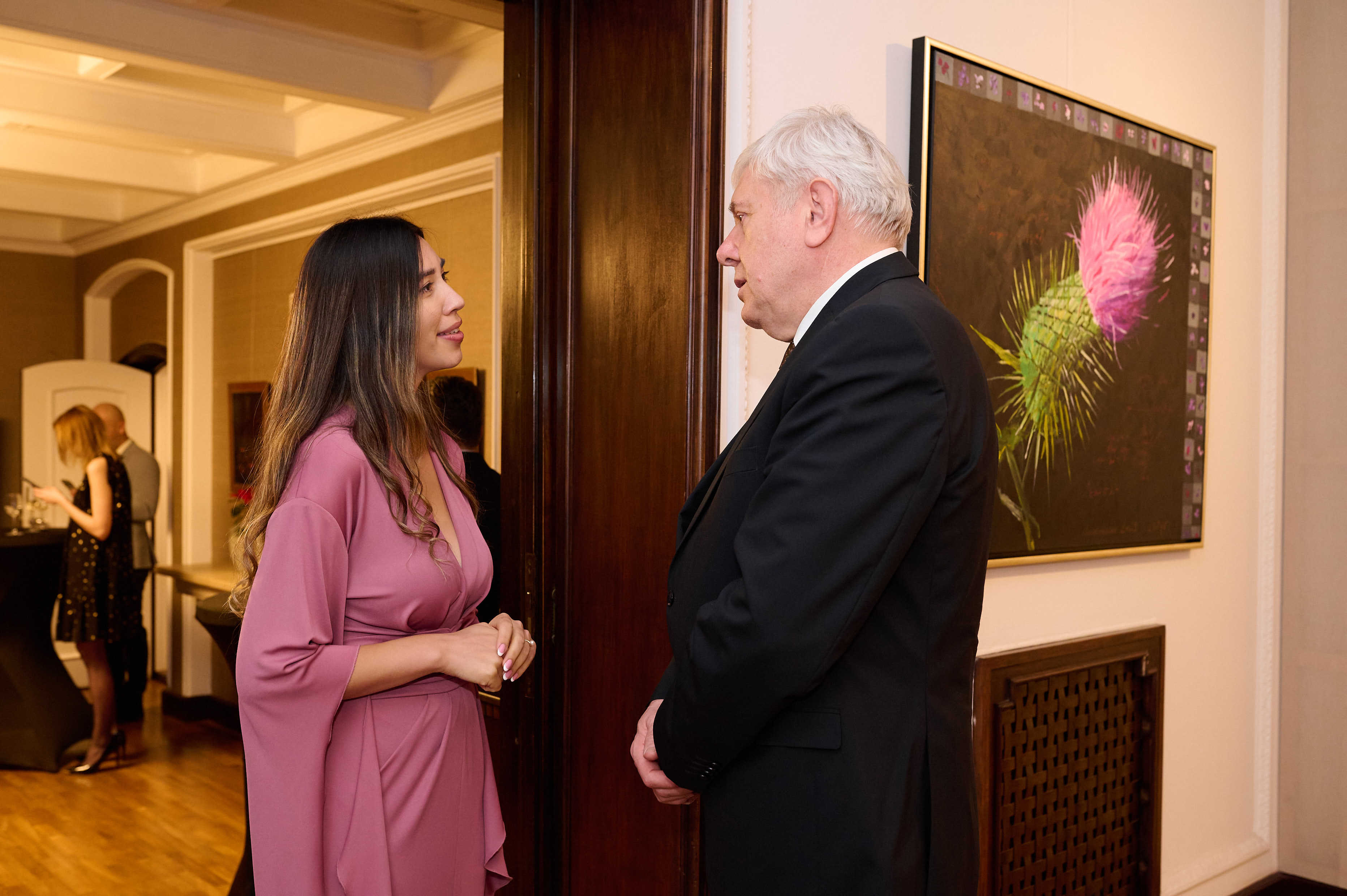
Florin Droc discussing with a guest at WIN Gallery

WIN Gallery: You lead a school with a specific cultural profile. Do you believe art can play a real role in students’ formation, beyond dedicated classes or theoretical discourse? How do you see this connection?

F.D.: Art is essential in the formation of a student. Beyond knowledge, it develops the capacity to contemplate, to ask questions, to tolerate ambiguity. Philosophically speaking, art educates sensitivity, and a society without sensitivity risks becoming functional, but devoid of meaning. Art teaches students to see the world not only as a space of utility, but as one of significance.

WIN Gallery: To what extent do you feel that a collector also has a public responsibility, not only a private one? Can a collector become a mediator between artist, public, and community?

F.D.: I believe that any collector, or lover of art, implicitly has a public responsibility. Through their choices, they can support artists, build bridges between works and audiences, and contribute to the formation of a cultural community. A collector can become a mediator, a translator of meanings.

WIN Gallery: The school you lead functions at the intersection of several cultures. Do you find this idea of cultural hybridity reflected in your collection as well? Does the cultural origin of artists matter to you?

F.D.: Cultural intersection is a theme that deeply concerns me, both in education and in art. The cultural origin of artists matters, not as a label, but as a source of complexity. Artists coming from hybrid spaces often bring unexpected perspectives and a richer visual language.

WIN Gallery: When acquiring a work, what weighs more: the initial, intuitive reaction, or careful documentation of the artistic and biographical context?

F.D.: The initial reaction is important, but not sufficient. Intuition opens the path, documentation deepens it. Very often, the biographical and artistic context of a work amplifies its meaning and allows it to “remain” more solidly over time.

WIN Gallery: Are there artworks in your collection, and beyond it, that challenged you, that required time to be accepted or understood? How do you manage this tension?

F.D.: Yes, there are works that challenged me. I accepted them with patience, allowing them time. Not all encounters are immediate. Some works require the viewer’s maturation.

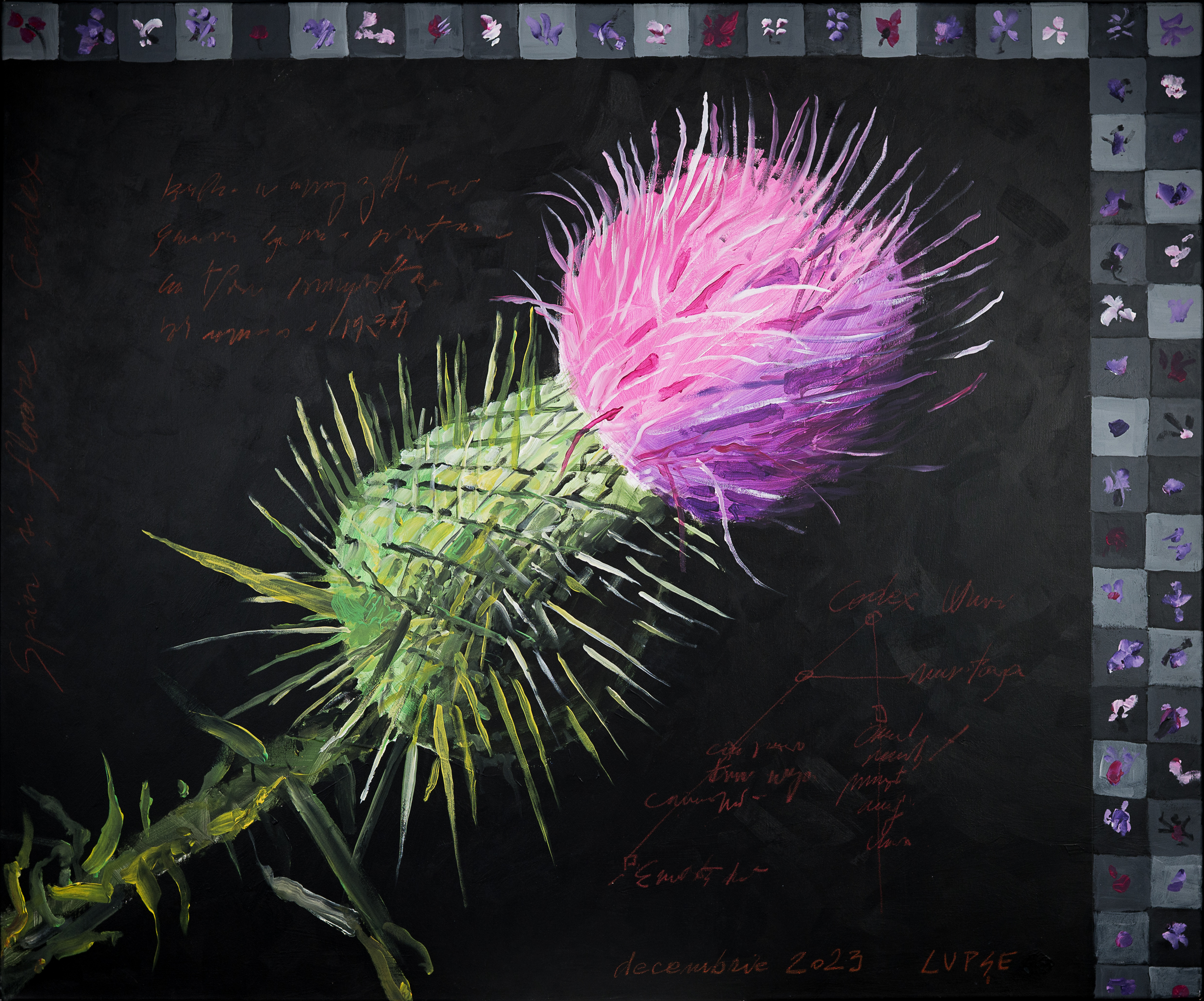
10.%20SPIN%20SI%20FLOARE 10.%20SPIN%20SI%20FLOARE

Marcel Lupșe – Thorn and Flower, 100x120cm, 2023

WIN Gallery: How does the relationship with a work of art change once it becomes part of everyday life? What remains after the enthusiasm of the first encounter?

F.D.: After the enthusiasm of the first encounter, what remains is daily dialogue. A good work does not exhaust itself, but transforms along with you. It becomes a reference point, a point of balance, a source of memories, relived in a new context.

WIN Gallery: For you, does art function more as a retreat from everyday life, or as a mirror that reflects and intensifies reality?

F.D.: For me, art is both refuge and mirror. It removes me from the everyday, but at the same time makes it more intelligible. In moments of fatigue, looking at a painting can be an act of rebalancing. Art has the power to lift the individual from a difficult point, to remind them that depth exists beyond the immediate.

WIN Gallery: How do you perceive the current Romanian art scene? What do you think it lacks, and what works well?

F.D.: The Romanian art scene is vibrant and diverse, but sometimes insufficiently connected to the public. There is creativity and energy, but more cultural mediation and spaces for dialogue are needed.

WIN Gallery: What do you expect from an art gallery when you are in the position of a collector?

F.D.: From an art gallery, I expect cultural nourishment. Subjects for reflection. A community with shared concerns. The joy of discovery. A gallery is not just an exhibition space, but a meeting place for ideas. In this context of responsible proximity to contemporary art, the role of a gallery becomes essential. WIN Gallery is such a space, one that understands that art must not only be exhibited, but also accompanied. The gallery functions as a careful mediator between artist, public, and young generations in formation, offering not only works, but contexts for understanding, dialogue, and reflection. Through its assumed curatorial selections and openness toward contemporary artistic languages, WIN Gallery creates a framework in which the viewer is invited to remain, to return, and to build their own emotional register. WIN Gallery demonstrates that contemporary art can be demanding and, at the same time, profoundly human, when presented with responsibility and respect for the viewer.

WIN Gallery: If you were to offer a single piece of advice to someone at the beginning of their collecting journey, what would it be and why?

F.D.: One single piece of advice for someone at the beginning: to give themselves time. Not to collect for status or trend, but for the authentic joy of encountering art. Art does not rush, and neither should the viewer. Art does not allow itself to be conquered through speed. It requires patience, attention, and honesty toward one’s own sensitivity.

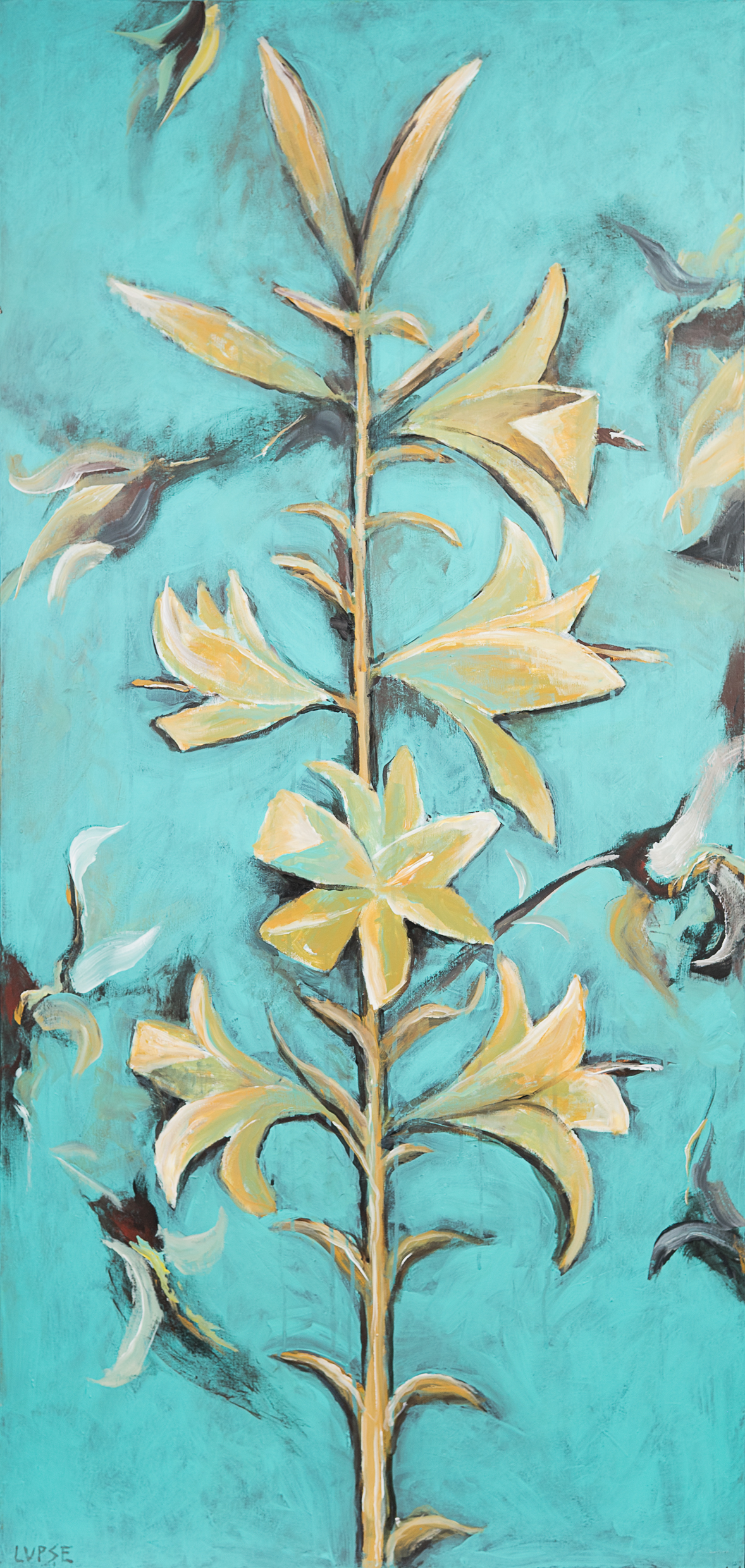
5.%20FLOAREA%20REGELUI 5.%20FLOAREA%20REGELUI

Marcel Lupșe - King's Flower, 150x70cm, 2024

Interview by Ph.D. Researcher Andrei FĂȘIE​,
Specialist in Visual Arts and Doctoral Student in Cultural Studies