





win%3Dalliance-networking-session
win-alliance-white
win-herastrau-win-real-estate
win%20real%20estate
win-brokers-broler-bucuri-de-lux
win-brokers-white
win-tireanu-motorsport-win-alliance%20copy
win-motorport-logo-alb

Collector’s Portrait - Iustinian Sandu

“True art is a continuous dialogue, not a simple viewing. It teaches us how to look; it does not tell us what to think.”

For readers familiar with the Romanian art market, the name Iustinian Sandu often appears in connection with a type of collecting built not only on aesthetic criteria but also on authentic relationships with artists. Passionate about painting since his youth and formed within a family environment where art was present, his path as a collector has been consolidated over time through decisive encounters with artists and through his direct involvement in organizing the creative camps in Sinaia. His collection reflects this personal dimension of the relationship with art, in which the works become traces of friendships, of creative contexts, and of a visual sensitivity cultivated over the years. In the dialogue below, Iustinian Sandu speaks about his first encounters with art, the role of intuition in the acquisition process, and the way a collection gradually becomes a form of cultural memory.
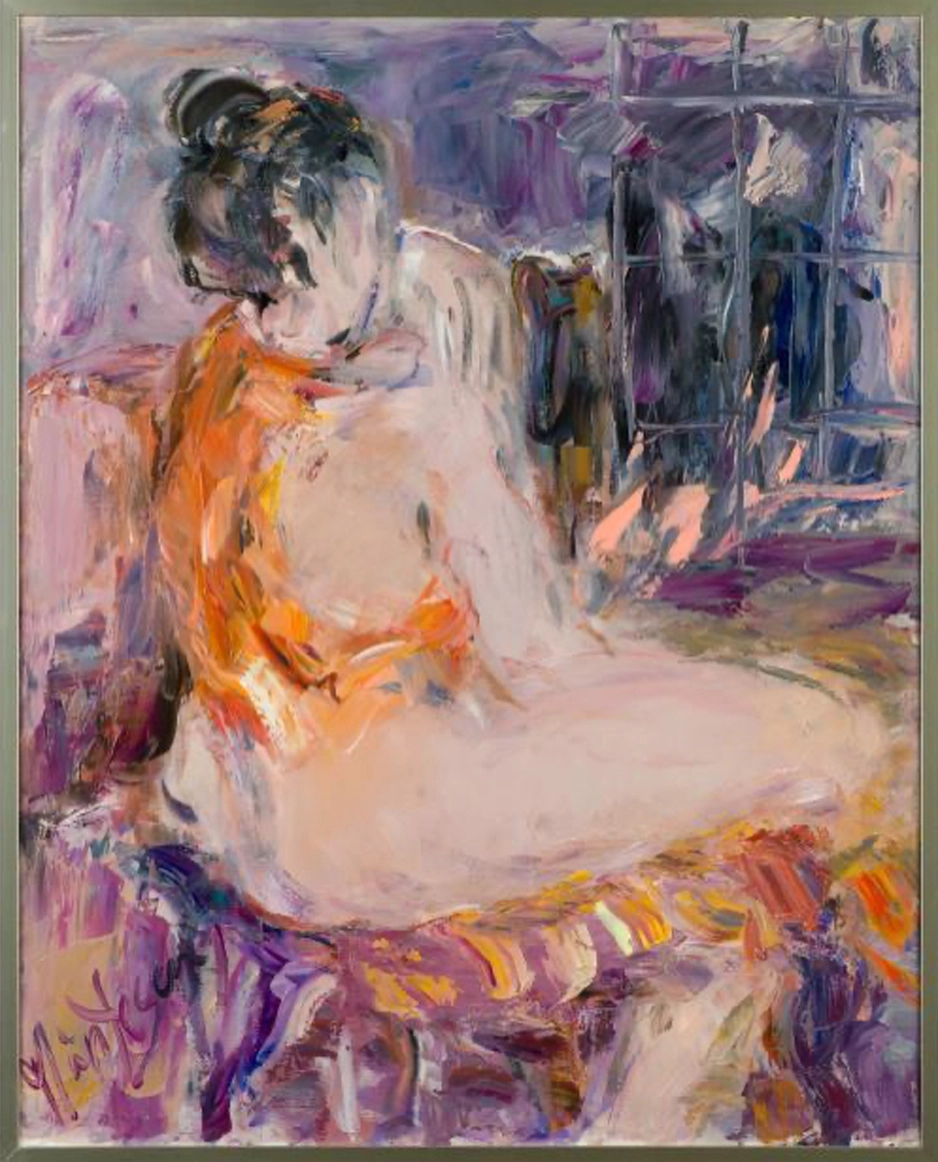
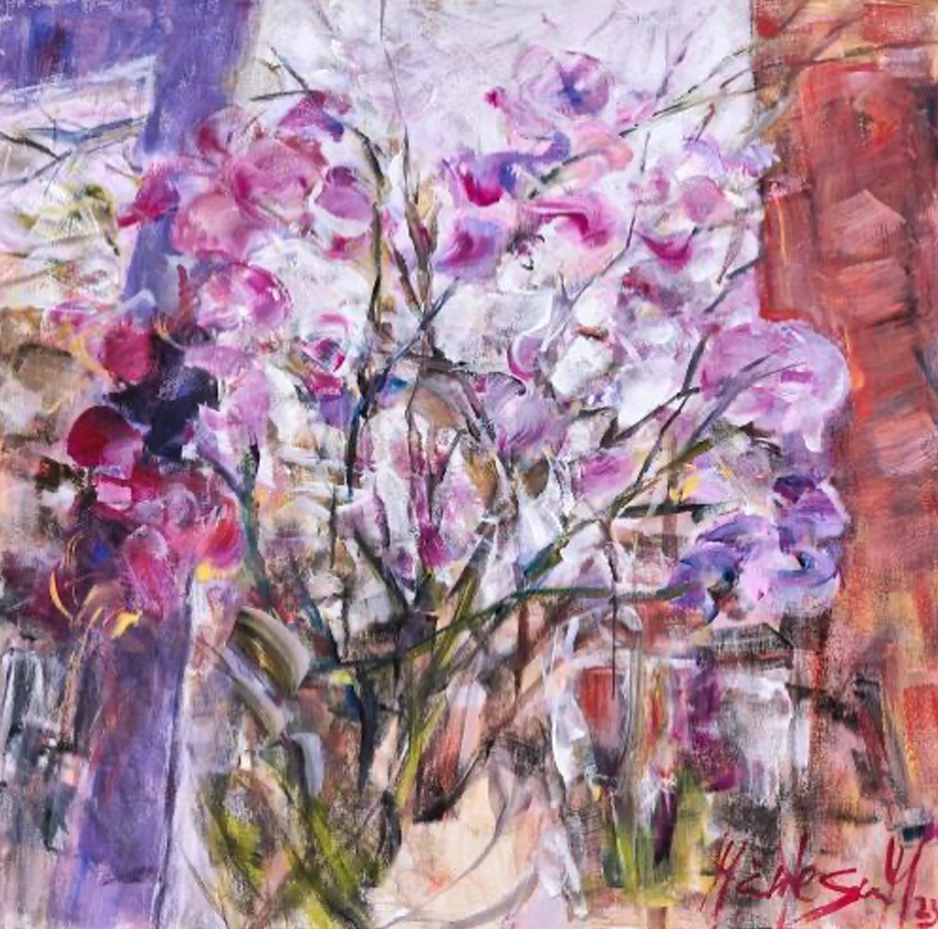
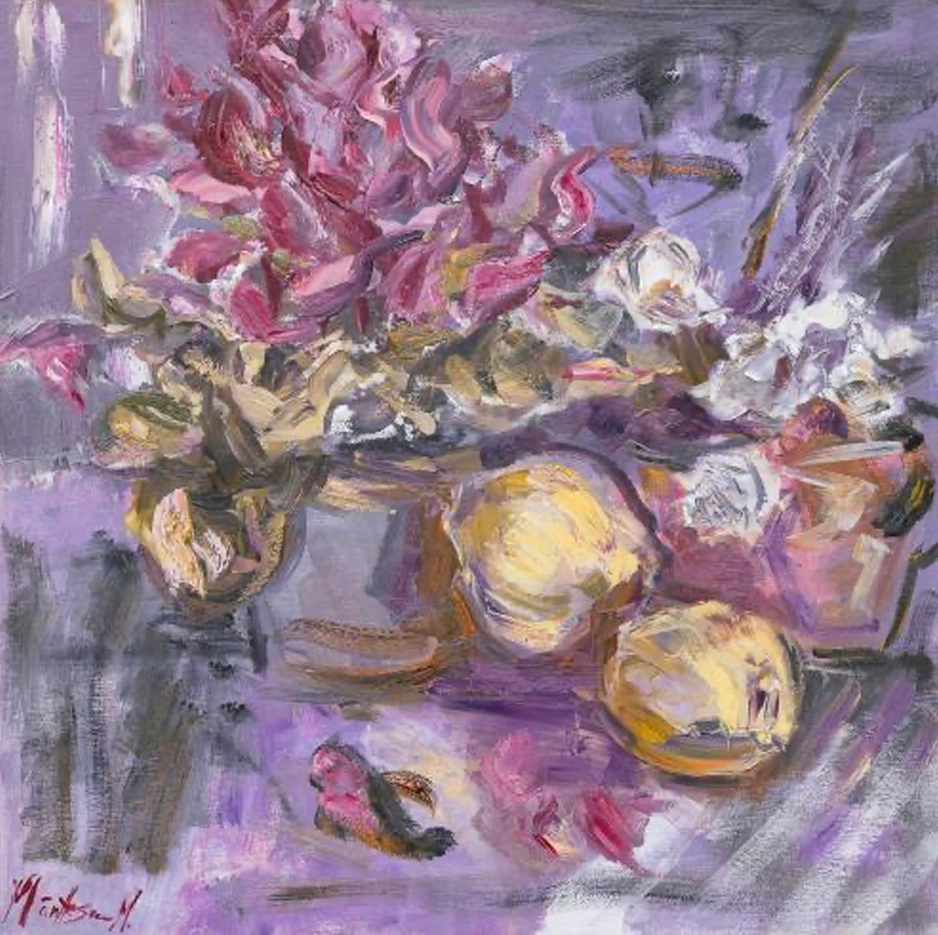
Marinela Măntescu-Isac – Reflection, 2026

WIN Gallery: As time passes, visual taste can refine itself, and the initial motivations may change or gain nuance. How would you describe your relationship with art today, compared to the moment when you began collecting?

Iustinian Sandu: At the beginning I was fascinated by the classics! I followed them at the auctions of the Alice auction house, sometimes even making acquisitions. Later I managed, on the occasion of organizing the creative camps in Sinaia, to meet contemporary painters to whom I feel great admiration and friendship. From that moment, the classics moved to a so-called secondary place, and I began collecting works that also had a story connected to my friendship with the artist!


WIN Gallery: The acquisition process often oscillates between an intuitive reaction and a decision built over time. What role does the intuition play in your decision to acquire an artwork?

Iustinian Sandu: When acquiring a piece of art, I am guided by the “eternal hunger” for beauty.
Aesthetic satisfaction creates in me an infinite joy!

The Golden Forest - Laurențiu Midvichi, oil on canvas, 100x120 cm, 2023

Eminescu - Valentin Tănase, pastel on cardboard, 70x50 cm, 2024

WIN Gallery: Among the works you own, is there one you are particularly fond of? 

Cornel Șurlea: Yes! It is "Madonna with Child" by Andrei Damo. He worked on it for more than a year, layer upon layer, in the Flemish style, close to Caravaggio. I put it in the most expensive Italian wooden frame. It emanates a special atmosphere, an extraordinary humanity. It is the work that, if I had to run somewhere with only one under my arm, I would take it without hesitation. 


WIN Gallery: How do you manage to integrate art into your daily life, into the mundane? 

Cornel Șurlea: From time to time, in the attic where I also have a small workshop, I take out some works from folders to air them out. I can no longer afford to buy others. I am a pensioner, I am of a certain age, and I've had some health issues. And, anyway, I think I have enough. 

I don't have very expensive works, I don't have big names – and I know that well – but I believe I own many artistically valuable works. From time to time, I rearrange them: I change a frame, move a work from one place to another, bring it to an easel and display it for a few weeks. I walk past it, I talk to it. 

The same with sculptures: I notice that Gogu Alifie [editor's note: the collector's new cat] also has certain tastes. He sleeps better next to some works, by the window, in the display cases where I have gathered many pieces. He also has preferences, favourites. 

See, art is for everyone. 


WIN Gallery: What experiences or encounters shaped your collecting method? 

Cornel Șurlea: I remember that around '96, I went through a very difficult period. That's life: I suddenly found myself without money, without health, without anything. I used to walk around the city and stop at the Orizont art gallery, where I would look in the window. 

It was a very successful gallery. The lady there organized small presentations, and the exhibited works seemed to give me strength, made me hope that I would recover, that things would get better and that it would be fine. I would stand for hours, "like a fool," looking at the window. At one point, the girls from the gallery drew the attention of the manager, who came to me and invited me in. I told her: "No, no... I just want to see these ones." 

It had become a ritual for me. Every two or three days, I would go there, recharge myself, look at the works and tell myself: "When I recover and have money, I will buy this, this, and this." Among them was a painting – an Epiphany, done in a naive style, by a painter from Tulcea. 

Slowly, I recovered. I started working again, and money began to come in. I would still drive past the gallery and look to see if the works were still there. Until the moment came for me to go and buy them. 

But even on the way, I felt that something was not right. And indeed, when I entered, the painting was no longer there. Neither was the sculpture. Instead, there were a few other works – by Darie Dup and Reka Csapo Dup, as well as by Gheorghe Munteanu from Târgu Mureș – which I bought and still have now. However, I asked about the painting. The lady told me it had been bought by someone from a foreign company. 

"No way," I replied. "That's my painting. Call him and tell him I'll give him double, triple, just to sell it to me!" But it couldn't be done. 

I suffered immensely. It was the first failure of this kind, and since then, I tell everyone: what you like and can buy at that moment, do it. Not just in art, in any field. Because it might be a unique moment, and you will never encounter that chance again. 

It was a painful experience that marked me... but also helped me. 


WIN Gallery: How did you first discover Valentin Tănase's works? 

Cornel Șurlea: Through a mutual friend who had an exhibition at the Military Circle, I think around 2009-2010. There I also saw works by Valentin Tănase, and I liked them a lot! So I remembered him from then. Later, we met when he did the cover of my catalogue The Golden Fish

The story is very interesting. He had a work that I had seen, and on one occasion, at his home, over a glass of wine, I told him: "Valentin, this work, look, I'll take it, but make it, as if... in the lower part, draw a golden fish, so I can put it in the exhibition, to match the theme." And he, a man who I believe never refuses, said "fine" and did it, and the work also appeared on the album cover. 


WIN Gallery: What attracts you most to Valentin Tănase's work? 

Cornel Șurlea: The narrative ones with a surrealist touch. 

Collector Cornel Șurlea together with Maestro Valentin Tănase and singer Raluca Moldoveanu

The Illusion of Reality - Valentin Tănase,
oil on canvas, 130x110 cm, 2021 

WIN Gallery: In what way do his works resonate with your own vision of art? 

Cornel Șurlea: There are a few works, not many, that don't attract me. 

But, looking at what he does and relating it to the technique he chooses, he has works that I would always want in my collection. And I don't see who could continue along this line. I don't think many will follow the same direction. 

This is also due to his great work ethic, because he is very conscientious and extremely organized. It's also his wife's merit! 

Claudia has been a good companion and a reliable support. Everything is very well organized and staged. He is a man of his word whom you can rely on. 

The Visit - Valentin Tănase, engraving, 50x40 cm, 1978

Interview by Ph.D. Researcher Andrei FĂȘIE​,
Specialist in Visual Arts and Doctoral Student in Cultural Studies