WIN Gallery: Did you have a favourite composer, musician, or style of music that engaged more of you and made you vibrate?
Andreea Stoica: I listened to piano music and, to be honest, I didn't have a particular composer. There were parts that I really liked and wanted to listen to, over and over again, so I would ask my parents to play them in a loop. But let's not forget the legendary music from Tom and Jerry series, which is still fantastic today! I really enjoy watching these cartoons even at this age and listening to the soundtrack; it's sensational! Of course, we watched cartoons on VHS tapes, and I remember that one of the episodes featured Franz Liszt's Second Rhapsody, which is still one of my favourite masterpieces. And yes, we would ask my father to rewind the tape and play Tom's concert again and again.
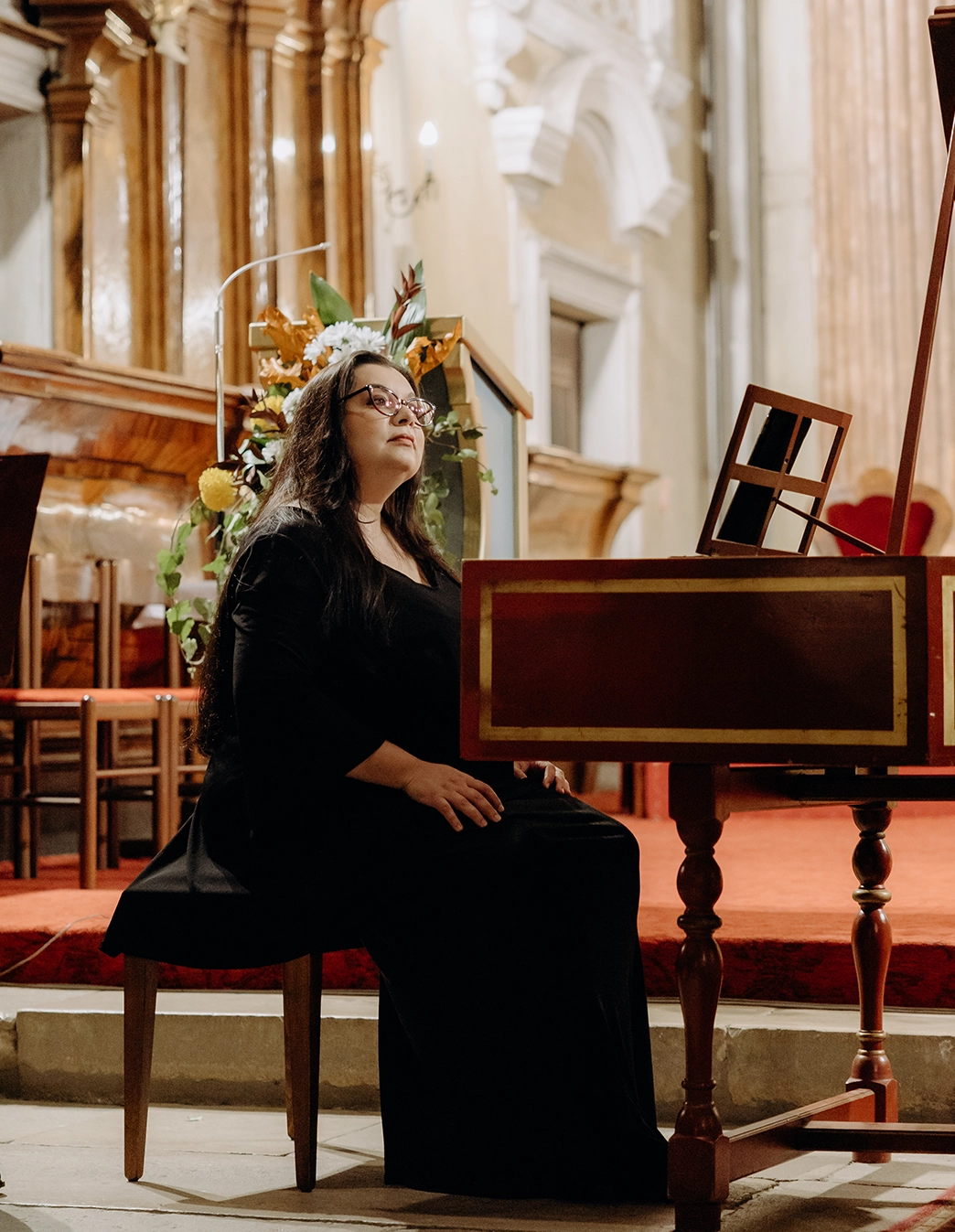
WIN Gallery: From Tom and Jerry, I suggest we move on to... the harpsichord, a rare instrument often perceived as "niche" instrument. What attracted you to it and could you share the differences between a piano and a harpsichord?
Andreea Stoica: First, the difference is related to the way it is constructed—it appeared in the 16th century, and its construction was totally different from the piano we know today. It is, in fact, a precursor to the piano, and the strings played on the harpsichord are made of a different material, not of steel. It also lacks the resonance we feel in today's piano because it lacks the metal part—the bronze plate that helps with tuning and resonance—as the harpsichord is made of wood. The sound box is much smaller and the sound – considering that at the time there was only one very thin string on the harpsichord where today there are three on the piano – the sound of the harpsichord is very different. It is actually "plucked," not struck with a hammer, as is on the piano. And there's something else: the sound of the harpsichord seems fragile, but it is actually very powerful because it is distinct, penetrating, and personal; you can't compare it to anything else. It gives you a feeling that alternates between rigor and freedom that is difficult to put into words. Having listened to Baroque music since I was a child, I have always had a soft spot for this instrument; it is my favourite.
WIN Gallery: Do you think you require a special sensitivity to play the piano?
Andreea Stoica: I think you can't help but have it if you're a musician. It's something you realize as music becomes part of your life. You are a sensitive person from the early beginnings, it's inside of you, but it depends on how much you want to let it unfold.